BARF for Cats: Why Raw Feeding Is So Demanding
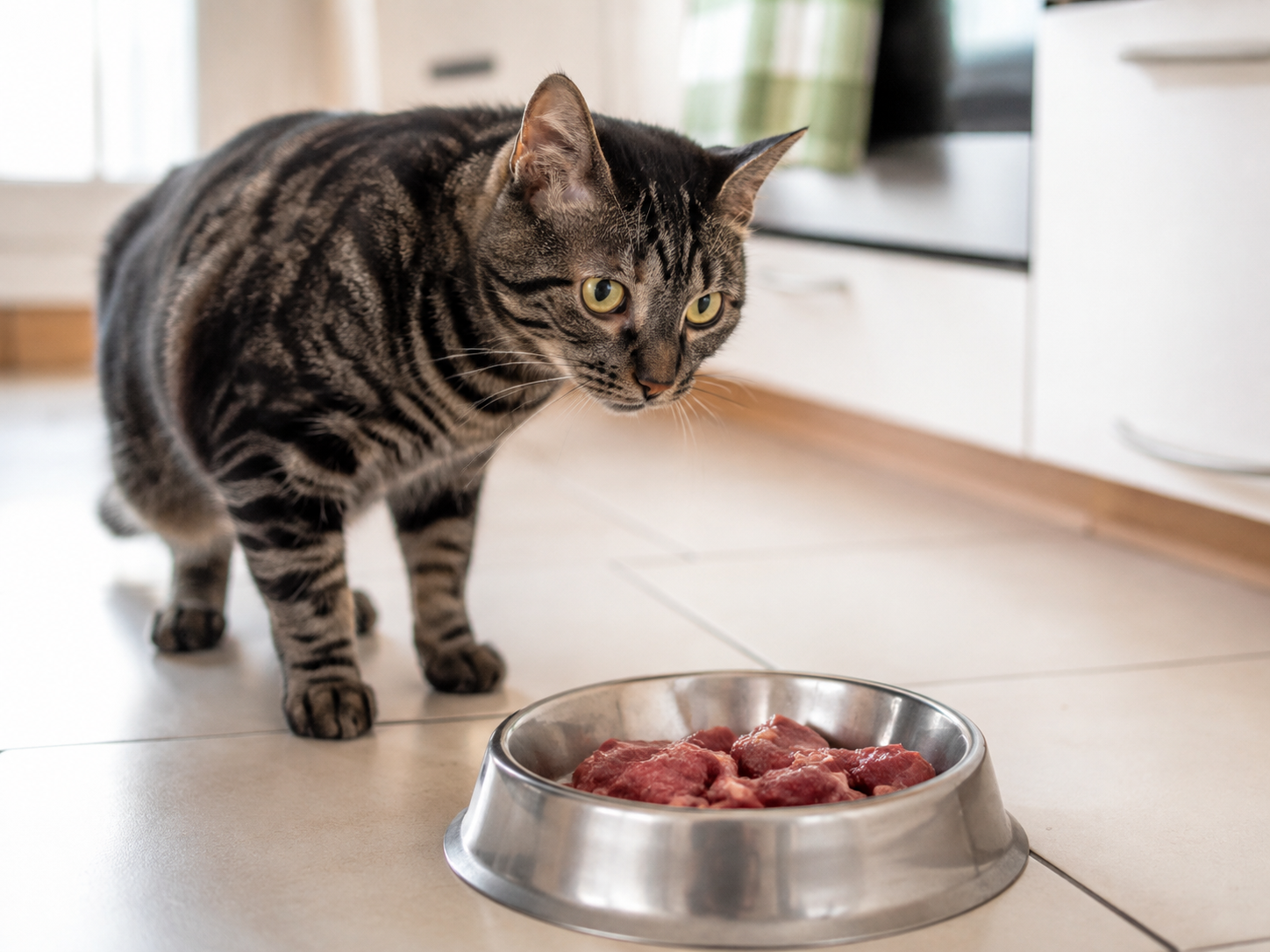 BARF for Cats
At first glance, raw feeding can seem especially logical for cats.
Cats are obligate carnivores, so a diet based on fresh meat may appear more “natural” than processed food. In practice, however, BARF for cats is considerably more demanding than many owners expect.
The difficulty is not simply getting a cat to eat raw meat. The real challenge is making sure the diet consistently provides everything a cat needs.
Cats have very specific requirements for nutrients such as taurine, calcium, phosphorus, iodine, vitamins and trace elements. At the same time, many cats are sensitive to changes in smell, temperature and texture.
That combination makes raw feeding possible, but far from foolproof.
Why BARF for Cats Is So Easy to Get Wrong
The first problem is acceptance.
Cats can be extremely selective eaters. A food they happily accepted yesterday may suddenly be refused because it smells slightly different after thawing or has a different texture.
Raw meals can therefore become frustrating if the cat regularly skips food or if recipes need to be changed constantly to keep them interested.
This is more than an inconvenience.
Cats should not go without food for long periods, especially if they are overweight, because prolonged inadequate intake can increase the risk of hepatic lipidosis.
A feeding method is only useful if the cat actually eats it reliably.
Meat Alone Is Not a Complete Cat Diet
One of the most important misunderstandings is that obligate carnivore means “meat is enough”.
It is not.
Cats need a carefully balanced nutrient profile. Taurine is particularly important because cats cannot synthesize enough of it to meet their needs.
Deficiency can have serious consequences, including effects on the heart and eyes.
A raw diet also needs properly calculated calcium and phosphorus, along with nutrients such as iodine, copper, zinc, vitamin A, vitamin D and essential fatty acids.
A bowl can look perfectly species-appropriate and still be nutritionally incomplete.
That is why BARF for cats should be formulated against established nutrient requirements rather than built from ingredient intuition alone.
Calcium Can Be Difficult in Practice
With dogs, raw meaty bones are often used as part of the calcium strategy.
Cats are less predictable.
Some will eat small raw bones, while others refuse them or swallow pieces in ways that make owners uncomfortable.
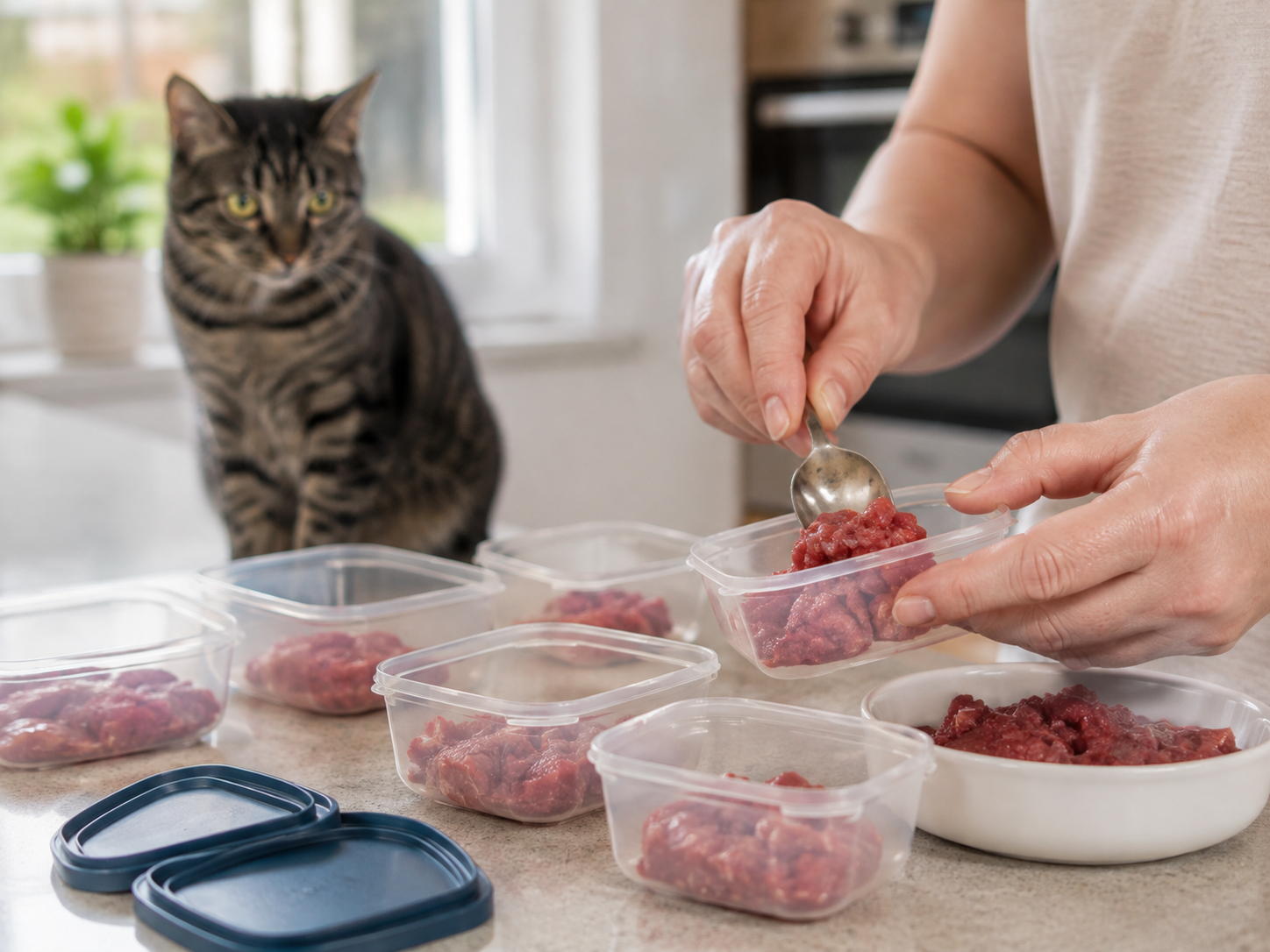
When bones are removed, calcium has to come from another accurately dosed source, such as a suitable mineral supplement or eggshell-based product.
This is where “just adding a little calcium” becomes risky.
The amount has to match the rest of the diet, particularly its phosphorus content.
For kittens, correct mineral balance is even more important because skeletal development is still ongoing.
Taurine Needs Special Attention
Taurine is one of the nutrients that makes cat nutrition particularly distinctive.
Cats require a reliable dietary supply.
Different ingredients contain different amounts, and processing or storage can also influence taurine availability.
This means it is unsafe to assume that any meat-heavy raw diet automatically provides enough.
Many properly formulated raw cat diets therefore include calculated taurine supplementation.
It is a small detail in terms of quantity, but an essential one nutritionally.
BARF for Cats: Hygiene Is a Real Practical Challenge
Raw meat can carry pathogens including Salmonella, Campylobacter and certain strains of E. coli.
Cats may tolerate some bacterial exposure differently from humans, but raw feeding still creates hygiene risks for the household.
This is especially relevant because cats often eat slowly.
A dog may finish a raw meal in a minute. A cat may return to the bowl several times over a longer period.
In warm rooms, that means raw food can sit out too long.
Safe handling includes thawing food in the refrigerator, cleaning bowls thoroughly and removing leftovers promptly.
Households with young children, elderly people or immunocompromised individuals should be especially careful.
Multi-Cat Households Make Portion Control Harder
Raw feeding becomes more complicated when several cats share a home.
One cat may eat slowly while another steals food.
A dominant cat may consume too much, while a more cautious cat receives too little.
This makes it harder to know whether each individual cat is actually receiving the calculated ration.
Separate feeding areas or supervised meals may be necessary.
If that is unrealistic in everyday life, another feeding method may simply be more practical.
Signs That BARF May Not Be Working Well
A raw diet deserves review if a cat repeatedly vomits, develops persistent diarrhea, loses or gains weight unexpectedly or becomes increasingly reluctant to eat.
Poor coat quality or recurring digestive issues can also be reasons to check the diet.
These signs do not prove a nutrient deficiency.
They may also indicate illness.
But if feeding requires constant adjustment without ever becoming stable, the system may not be working well for that individual cat.
Safer Alternatives to BARF for Cats
Raw feeding does not have to be an all-or-nothing decision.
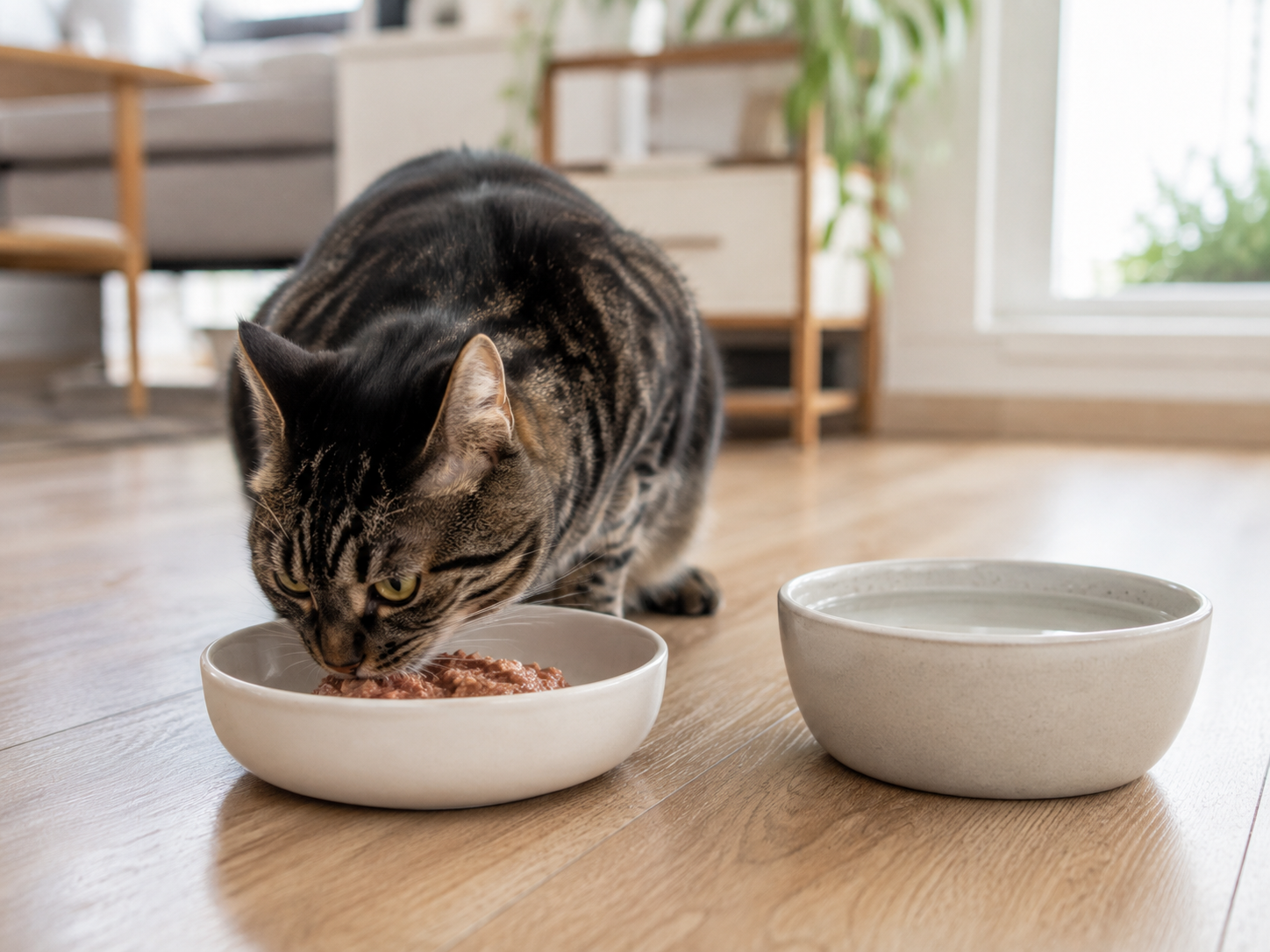
For many cats, a complete wet food is the easiest way to combine high moisture intake with predictable nutrient balance.
A complete wet food is formulated to cover essential nutrient requirements and removes much of the calculation involved in BARF.
Another option is a carefully controlled hybrid approach.
A complete wet diet remains the nutritional base, while small amounts of fresh food are offered as extras.
The key is that the fresh additions stay small enough that they do not significantly dilute the nutritional balance of the main food.
Some cats also tolerate gently cooked meat better than raw meat.
This can reduce some hygiene concerns while still allowing fresh ingredients to be used, provided the complete ration is correctly formulated.
Consistency Is Often More Valuable Than Variety
Cats do not necessarily need a constantly rotating menu.
For sensitive or picky cats, too much variety can make feeding less predictable.
If you move away from raw feeding, it is often better to choose one or two well-tolerated complete foods and keep the routine stable for a period before making further changes.
That gives you a clearer picture of:
appetite
stool quality
weight
tolerance
Constant switching can hide the real cause of problems.
If You Still Want to Feed BARF
BARF can work for cats, but it should be approached like a formulated diet rather than a loose feeding philosophy.
The essentials are:
calculate taurine and mineral supply
use a reliable calcium strategy
maintain strict hygiene
keep recipes consistent
monitor body weight and stool quality
Kittens, pregnant cats and cats with chronic disease need even more careful formulation.
FAQ
Is BARF suitable for cats?
It can be, but only when the diet is complete, balanced and hygienically managed.
Is raw meat alone enough for cats?
No. Cats require taurine, calcium, vitamins, trace elements and essential fatty acids in appropriate amounts.
Do cats need bones in a raw diet?
Not necessarily. Calcium can also come from a properly calculated alternative source.
Is wet food safer than BARF?
A complete wet food is generally easier to balance and manage safely in everyday life.
Can I combine wet food and raw food?
Yes, but fresh additions should remain controlled so they do not make the overall diet nutritionally incomplete.
Conclusion
BARF for cats can work, but it is one of the more demanding ways to feed.
The biggest challenges are not enthusiasm or ingredient quality. They are nutrient precision, acceptance, hygiene and consistency.
Taurine, calcium, phosphorus, iodine and trace elements all need to be covered reliably, while the diet also has to be something the cat will actually eat every day.
For many households, a complete wet food, a carefully planned hybrid approach or a properly formulated cooked diet may be easier and safer.
If you want a feeding strategy that fits your cat’s preferences, routine and nutritional needs, an individual Aniveri feeding plan can help build a balanced approach without relying on trial and error. If you would also like to include hair analysis results in feeding planning, explore hair analysis with a personalised feeding plan for your cat.