BARF Diet for Dogs: How Raw Feeding Works
 BARF Diet for Dogs: How Raw Feeding Works
Raw feeding is a popular topic among dog owners who want greater control over the ingredients in their pet's bowl. The BARF diet for dogs generally combines uncooked meat, organs and other ingredients in an attempt to provide a complete daily ration. But knowing what's in a meal is not the same as knowing whether it meets every nutritional requirement.
This guide explains the basic components of BARF, how a ration should be evaluated, the potential advantages of ingredient control and the risks that deserve serious consideration before switching.
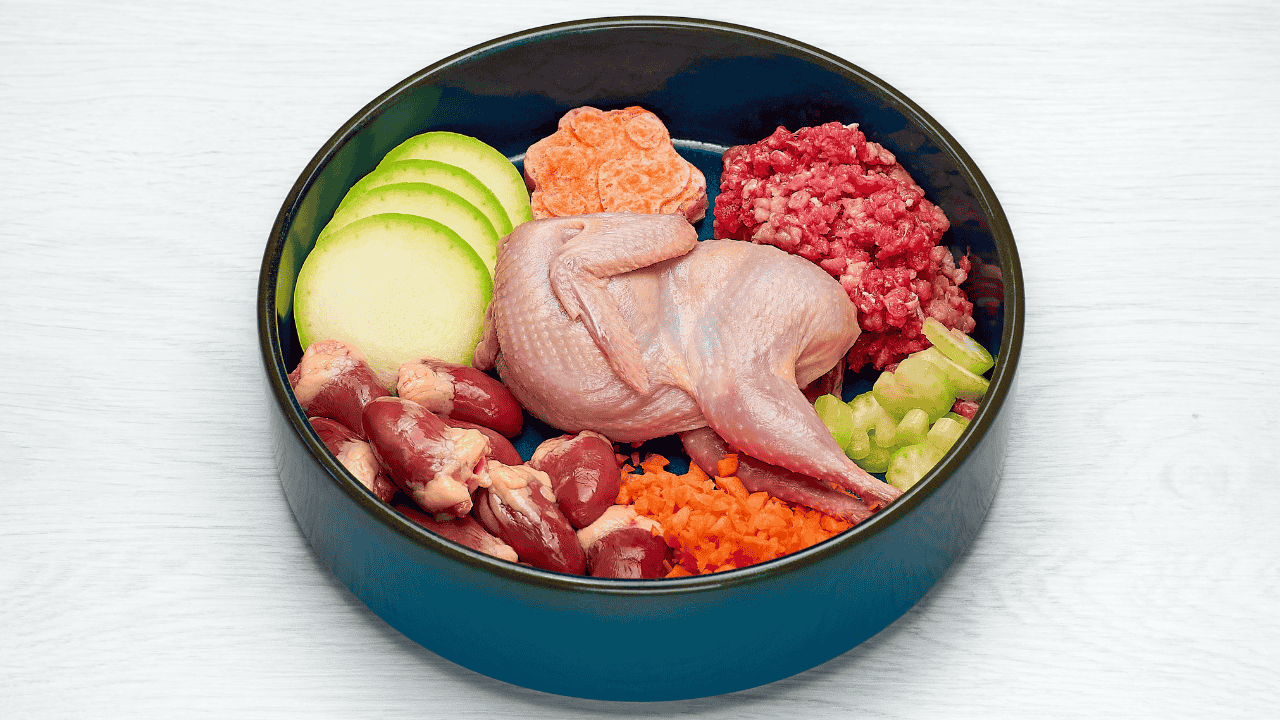
What Is BARF Feeding?
BARF is commonly explained as Biologically Appropriate Raw Food or Bones and Raw Food. Recipes may include raw muscle meat, organs, bones, vegetables, fruit, fats and supplements. Some owners prepare every ingredient themselves, while others buy frozen commercial raw diets.
The approach is often described as similar to what wolves eat. However, domestic dogs are not nutritionally identical to wolves, and a diet's resemblance to prey does not establish that it is complete or safer. Dogs can digest properly cooked starch, and appropriate complete cooked or commercial foods can meet their needs.
The central question about a BARF diet for dogs is whether its nutrient content, calorie level and food safety are suitable for the individual animal.
The Main Components of a BARF Diet for Dogs
Muscle Meat and Other Protein Sources
Meat supplies protein, amino acids, fat and some minerals. Beef, poultry and other species vary considerably in fat content and nutrient composition. Muscle meat alone contains too little calcium relative to phosphorus for a balanced long-term diet.
Heart is often grouped with muscle meat in feeding plans, despite being an organ anatomically. Its nutrient profile is different from liver, and these ingredients are not freely interchangeable.
Organ Meat
Liver and other organs provide certain vitamins and trace elements, but too much liver may supply excessive vitamin A or copper. Organ proportions need to reflect the specific ingredient, the dog's size and the calculated nutrient requirement. An arbitrary handful of organs does not ensure balance.
Calcium and Phosphorus
Bones are sometimes included as a calcium source, but they can fracture teeth, obstruct the gut or cause injury. Raw bones are not risk-free, and cooked bones should never be offered as edible bones because they may splinter. Safer, precisely measured calcium sources may be available in a professionally formulated ration.
Both the amount of calcium and its relationship to phosphorus matter. Puppies, especially those expected to grow into large dogs, are particularly vulnerable to errors. A BARF diet for dogs should not rely on fixed bone percentages to guarantee correct mineral intake.
Vegetables, Fibre and Carbohydrates
Some raw recipes include carrots, courgette, pumpkin, fruit or other plant ingredients for fibre and variety. These ingredients can be useful, but they do not automatically fill vitamin and mineral gaps. Dogs can also use appropriately cooked starches; excluding carbohydrates is a choice, not a biological requirement.
Ingredients such as onion, garlic, grapes and raisins must be kept out of the diet. The contribution of each plant ingredient should be assessed as part of the complete ration.
Fats, Oils and Supplements
Fat provides energy, and essential fatty acids support normal body functions. Fish oil may supply EPA and DHA, while plant oils have different fatty-acid profiles. Neither can simply replace the other gram for gram.
Depending on the full recipe, iodine, zinc, copper, vitamin D, vitamin E and other nutrients may need targeted supplementation. More is not always better: excessive amounts can be harmful. Supplements must be selected and measured against the diet's actual nutrient gaps.
Why Fixed BARF Percentages Are Not Enough
You may come across rules suggesting that 70–80% of a ration should be meat and bone, with the remainder divided between organs and plants. Such templates describe ingredients by weight, not the calories or essential nutrients they supply. Two meals with identical percentages can differ greatly in fat, calcium, iodine and vitamin content.
A properly formulated BARF diet for dogs starts with the animal's age, body condition, activity level and health status. A qualified veterinary nutrition professional can calculate daily energy and nutrient targets, evaluate the composition of each ingredient and prescribe precise supplements and preparation instructions.
The FEDIAF Nutritional Guidelines provide reference values for complete diets for different life stages. They cannot be replaced with a visual assessment of what looks like a natural meal.
Are There Proven Health Benefits of BARF?
Owners sometimes report shinier coats, firmer stools, better appetite or improved energy after switching to raw food. Such observations can be genuine, but they do not prove that the raw state of the ingredients caused the change. Differences in calorie intake, fat content, digestibility or ingredient selection may explain some responses.
Current veterinary guidance does not establish that raw meat-based diets provide general health benefits over nutritionally complete commercial diets or balanced home-cooked diets. Raw bones are also not a necessary or risk-free method of dental care. Regular tooth brushing and veterinary dental care are safer foundations for oral health.
A practical benefit of a carefully planned BARF diet for dogs may be ingredient transparency and flexibility. Those advantages can also be achieved through an individually formulated cooked diet, without the same exposure to pathogens from raw meat.
BARF Diet for Dogs: The Main Risks of Raw Feeding
Bacteria and Parasites
Raw meat can contain Salmonella, Listeria, certain strains of E. coli and other disease-causing organisms. Dogs may become ill or shed pathogens without obvious symptoms, potentially exposing people and other animals. Freezing does not reliably eliminate bacteria, and careful handling reduces but cannot remove all risks.
Households with young children, pregnant people, older adults or immunocompromised members should be especially cautious. Public-health and veterinary organisations generally advise against raw animal-based diets because of these risks.
Nutritional Imbalances
A homemade raw ration can look varied yet still supply too little calcium, iodine or vitamin D, or too much vitamin A and certain minerals. Blood tests alone cannot confirm that all nutrients are present in appropriate amounts. A full recipe analysis is more informative, supported by veterinary monitoring when indicated.
Bone Injuries and Gastrointestinal Problems
Bones can cause broken teeth, choking, constipation and gastrointestinal obstruction or perforation. High-fat raw meals may also cause digestive upset or be unsuitable for dogs with pancreatitis. For these reasons, a BARF diet for dogs is not automatically appropriate for every animal.
How to Evaluate a BARF Diet for Dogs
Before changing diets, use this checklist:
Have your dog assessed. Review growth stage, body and muscle condition, medications and any chronic illness with your veterinarian.
Request a complete recipe calculation. Check energy, amino acids, essential fats, calcium and phosphorus, vitamins and trace elements—not just ingredient ratios.
Check commercial labels carefully. A raw product described as complementary or intended for intermittent feeding is not necessarily a complete daily diet.
Make food safety a priority. Keep raw ingredients chilled, thaw them in the refrigerator, prevent cross-contamination and clean hands, utensils and surfaces thoroughly.
Monitor the transition. Track appetite, stools, weight and body condition, and arrange review when ingredients or health needs change.
If your priority is control over ingredients rather than feeding raw specifically, ask whether a balanced home-cooked diet would meet the same goal more safely.

When Should You Contact a Veterinarian?
Arrange advice before starting raw feeding, especially for puppies, pregnant or nursing dogs, or dogs with kidney disease, pancreatitis or other medical conditions. Seek prompt veterinary assessment if your dog develops repeated vomiting, persistent diarrhea, weight loss, marked lethargy or signs of abdominal pain.
Choking, repeated unsuccessful attempts to vomit, collapse or a painful distended abdomen require emergency care. Tell the veterinary team if your dog eats raw animal products or bones, as that information may affect the diagnostic approach.
Frequently Asked Questions
Is the BARF Diet for Dogs Better Than Kibble?
Not inherently. The best diet is complete, safe and appropriate for your dog. There is no established general health advantage of raw food over suitable complete cooked or commercial diets.
Do Dogs Need Raw Bones for Calcium?
No. Calcium can be provided through appropriately formulated food or a precisely measured supplement. Bones introduce avoidable dental and digestive hazards.
Can Puppies Eat a BARF Diet?
Growth diets require particularly careful mineral and energy balance. A homemade raw diet should never be improvised for puppies; seek specialist veterinary nutritional advice and consider a complete cooked or commercial growth diet.
Can I Cook a BARF Recipe Instead?
Cooking can reduce microbiological risks, but changes in water content and nutrient availability mean that a raw recipe should not simply be cooked without reassessing the formulation. Ask for instructions designed for the cooked version.
Conclusion: Plan for Nutrients, Not Just Ingredients
The BARF diet for dogs is an approach to feeding raw animal and plant ingredients, not a guarantee of natural balance or better health. Individual ingredient control can be appealing, but nutritional completeness, bone injuries and foodborne pathogens are substantial considerations.
Aniveri can help you review your dog's current ration and discuss a personalised feeding plan with clearly calculated nutrients and practical preparation steps. Work with your veterinarian when health conditions or raw feeding risks are involved.