Homemade Dog Food: How to Build a Balanced Recipe
 Homemade Dog Food: How to Build a Balanced Recipe
Cooking for your dog can feel reassuring. You choose the ingredients, know what goes into the bowl and can adapt meals to your dog's preferences. But homemade dog food needs more than fresh meat and vegetables. To be suitable as an everyday diet, it must provide enough energy and every essential nutrient in the right amount.
A recipe that looks healthy may still lack calcium, iodine, vitamin D or other micronutrients. This guide explains the building blocks of a cooked diet, how to prepare it safely and why a professionally calculated recipe matters more than a fixed percentage of meat or vegetables.
Is Homemade Dog Food a Healthy Choice?
It can be. A carefully formulated cooked diet may be useful when an individual dog needs specific ingredients or when an owner prefers to prepare meals at home. Cooking also reduces many microbiological risks associated with raw meat, although food handling still matters.
There is no evidence that a homemade recipe is automatically healthier than a suitable complete commercial food. Veterinary studies have found nutritional problems in many recipes published online and in books. The key question is whether the whole diet meets your dog's needs consistently, not whether individual ingredients seem nutritious.
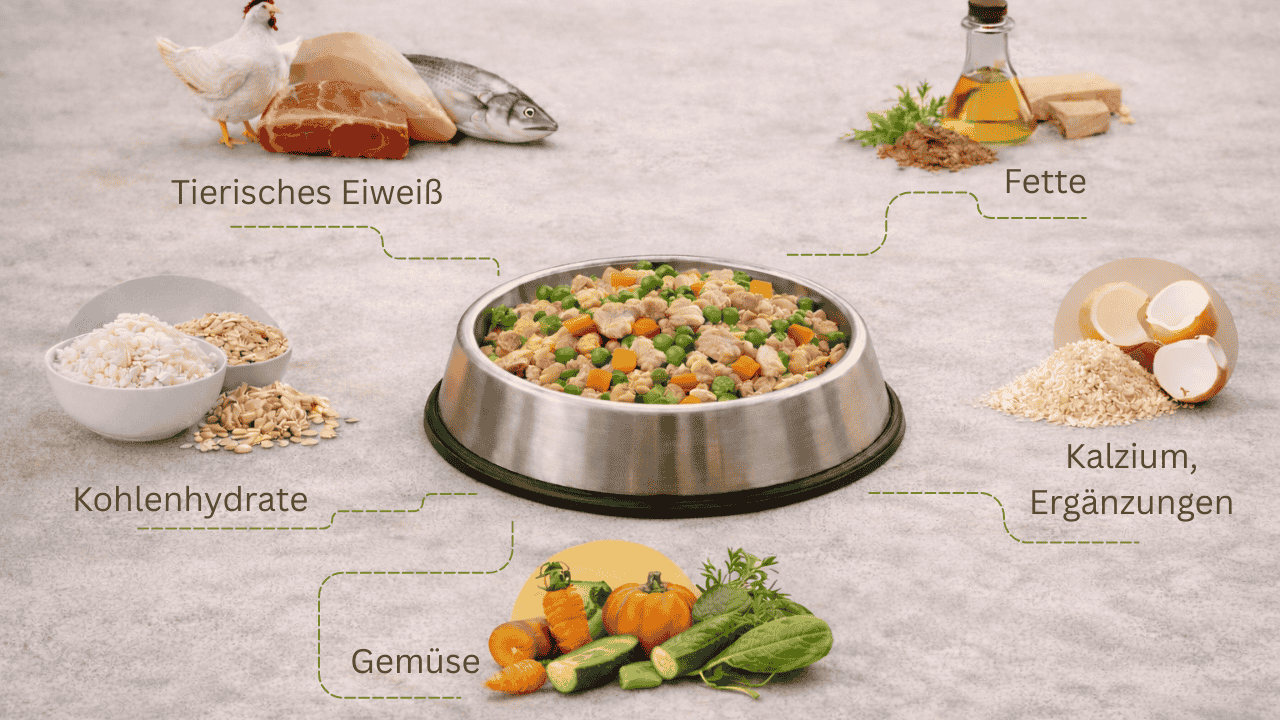
The Five Building Blocks of Homemade Dog Food
1. Protein: Muscle Meat, Fish and Other Sources
Cooked chicken, turkey, beef, eggs and certain fish can supply protein and essential amino acids. The appropriate choice depends on your dog's medical history, tolerance and the recipe's overall nutrient profile. Remove bones and cook animal ingredients thoroughly; avoid seasoning with onion, garlic or other potentially harmful additions.
Meat alone is not complete nutrition. Most boneless meat contains much more phosphorus than calcium, so a meat-heavy meal needs careful mineral balancing.
2. Carbohydrates: An Optional Energy Source
Dogs do not need a fixed percentage of rice, oats, potatoes or sweet potatoes in every meal. However, properly cooked starches can be practical, digestible energy sources and may help make a recipe easier to portion. Cook potatoes thoroughly and never use green or sprouted potatoes. Rice and other grains should be prepared according to the recipe.
A dog with a medical condition may require a different carbohydrate choice or amount. Avoid assuming that grain-free feeding is inherently healthier.
3. Vegetables and Fibre
Cooked carrots, pumpkin and courgette can contribute fibre, moisture and variety. Some dogs benefit from particular fibre types, but vegetables cannot be relied upon to fill all vitamin and mineral gaps.
The exact amount matters: adding extra pumpkin or replacing one vegetable with another can change calories, fibre and nutrient composition. When homemade dog food is formulated professionally, ingredient substitutions should be checked rather than improvised.
4. Fats and Essential Fatty Acids
Fat supplies energy, supports normal cell function and helps the body absorb fat-soluble vitamins. A recipe may need a measured oil or another fat source to provide sufficient essential fatty acids. Fish oil provides EPA and DHA, while flaxseed oil mainly supplies alpha-linolenic acid; they are not nutritionally interchangeable.
Too much fat can produce excessive calorie intake or digestive problems and may be inappropriate for dogs with pancreatitis. Follow the formulation instead of adding oils by eye.
5. Calcium, Trace Minerals and Vitamins
This is often the most easily overlooked part of homemade dog food. Calcium must be balanced with phosphorus, but the ratio alone does not prove the absolute amounts are adequate. Zinc, copper, iodine, selenium, vitamin D and vitamin E may also require particular attention.
Eggshell powder supplies calcium but not all the missing nutrients. Bone meal contains both calcium and phosphorus, and different products vary in concentration. A purpose-designed supplement may be appropriate, but only when its nutrient amounts match the recipe. Never assume that one multivitamin or a pinch of salt completes a meal.
How to Put Together a Balanced Homemade Dog Food Recipe
Think of a recipe as a calculation rather than a visual plate divided into percentages. A qualified veterinary nutrition professional should:
Estimate your dog's daily energy needs using age, body condition, activity and health.
Select the appropriate nutrient reference for the life stage, such as the FEDIAF Nutritional Guidelines.
Calculate the nutrients supplied by each ingredient at the actual cooked or raw weight specified.
Add precisely measured sources of any missing nutrients, including an appropriate mineral and vitamin supplement when necessary.
Provide exact preparation instructions, portion sizes and a plan for reassessment.
There is no universal safe formula such as “half meat, one-quarter rice and one-quarter vegetables.” Those proportions do not reveal whether the final meal meets requirements. A recipe suitable for a healthy adult may be inadequate or excessive for a growing large-breed puppy.

Safe Cooking, Storage and Meal Preparation
Good food hygiene protects both dogs and the people preparing their meals. Cook meat, poultry, fish and eggs thoroughly, prevent raw ingredients from touching ready-to-eat foods, and wash hands, boards and utensils after handling raw animal products.
Cook starches as directed, cool finished meals promptly and refrigerate or freeze portions. Thaw frozen meals safely in the refrigerator and reheat according to the recipe; allow food to cool before serving. Do not leave prepared meals sitting at room temperature for long periods.
If the recipe calls for oils or supplements to be added after cooking, follow those instructions. Certain nutrients are sensitive to heat, and supplement products may have their own handling guidance. Consistency is essential when preparing homemade dog food in batches.
Common Mistakes to Avoid
Skipping supplements: Meat, rice and vegetables rarely provide all essential micronutrients in suitable proportions.
Changing ingredients freely: Swapping turkey for salmon or doubling the vegetables changes the nutritional profile.
Measuring by eye: Ingredient weights, oil quantities and supplement concentrations should match the calculated recipe.
Adding extra calcium: More is not automatically better, especially for puppies.
Forgetting treats: Snacks contribute calories and may affect dietary restrictions.
Not reviewing the plan: Weight changes, ageing and illness can mean that a once-appropriate ration needs adjustment.
The safest approach to homemade dog food is to use one complete, verified formulation and follow it as written, rather than combining several appealing recipes from the internet.
Monitoring Your Dog After the Switch
Change foods gradually when appropriate, unless your veterinarian gives different instructions. Keep records of appetite, stool quality and any digestive signs. Weigh your dog regularly and track body condition, not just the number on the scale.
A shiny coat or normal stools do not prove that all micronutrient requirements are met. Some dietary imbalances take months to become apparent. Review the recipe whenever ingredients or supplements change, and arrange follow-up nutrition assessments, especially for puppies, seniors and dogs with chronic conditions.
When Should You Contact a Veterinarian?
Seek veterinary assessment for persistent vomiting or diarrhoea, unexpected weight loss, poor appetite, lethargy or changes in movement or growth. Puppies, pregnant or nursing dogs, and dogs with kidney disease, pancreatitis or food allergies need particularly careful dietary formulation.
A homemade recipe is not a substitute for diagnosing or treating illness. A suitable diet can support veterinary care, but self-prescribing mineral or vitamin supplements may make an existing problem worse.
Frequently Asked Questions
Can I Feed Homemade Dog Food Every Day?
Yes, provided the recipe is complete and balanced for your individual dog and followed accurately. Occasional unbalanced toppers are different from feeding a home-prepared diet as the sole source of nutrition.
Do I Need to Add Calcium to Cooked Dog Food?
Many meat-based homemade recipes need a calculated calcium source, but the amount depends on all ingredients and the dog's life stage. Do not copy a supplement dose from another recipe or add calcium to an already complete diet without advice.
Is Homemade Food Better Than Kibble?
Neither option is automatically superior. A complete commercial diet can meet nutritional needs reliably, while a professionally formulated cooked diet offers ingredient control but requires careful preparation and ongoing checks.
Conclusion: Fresh Ingredients Need a Complete Plan
Making homemade dog food can be a practical option when every ingredient has a purpose and the full ration is nutritionally balanced. Protein, carbohydrates, vegetables and oils are only part of the picture: calcium, essential fatty acids, vitamins and trace minerals must be calculated too.
Aniveri can help you assess your dog's current feeding routine and develop an individual feeding plan that accounts for ingredients, portions and nutrient requirements. If your dog has a medical condition, coordinate the plan with your veterinarian. If you would also like to include hair analysis in your feeding review, explore a personalised feeding plan with hair analysis.